Day 55
We woke early and had a really nice breakfast at our hostel. It was loads of fruit, fresh juice and coffee! Probably one of the best breakfasts we have had so far in South America! They generally aren’t much of a breakfast bunch, hence sometimes we have cake for breaky! #health
We then quickly packed up our things and headed to the bus station to catch an 8am bus to Potosí. The buses aren’t as luxury as the ones in Chile and Argentina, but this trip is only 4 hours so we thought she’ll be right. The bus trip only cost us $6 AUD each as well, we are going to love the prices here I think!
We chugged away up and over mountains, getting to around 4600m altitude again at one point. The scenery was again spectacular. I was thinking if we had a car, we would be going at such a slow pace because we would stop at every damn pretty rock or mountain!
We made it to Potosí on time with no problems. The town was a lot bigger than we were both expecting! It is an old silver mining town from the 1500s. The Spanish brought many slaves here to mine in the worst conditions imaginable. This town used to be one of the richest in all South America because of the silver mine boom and the mine is still operational.
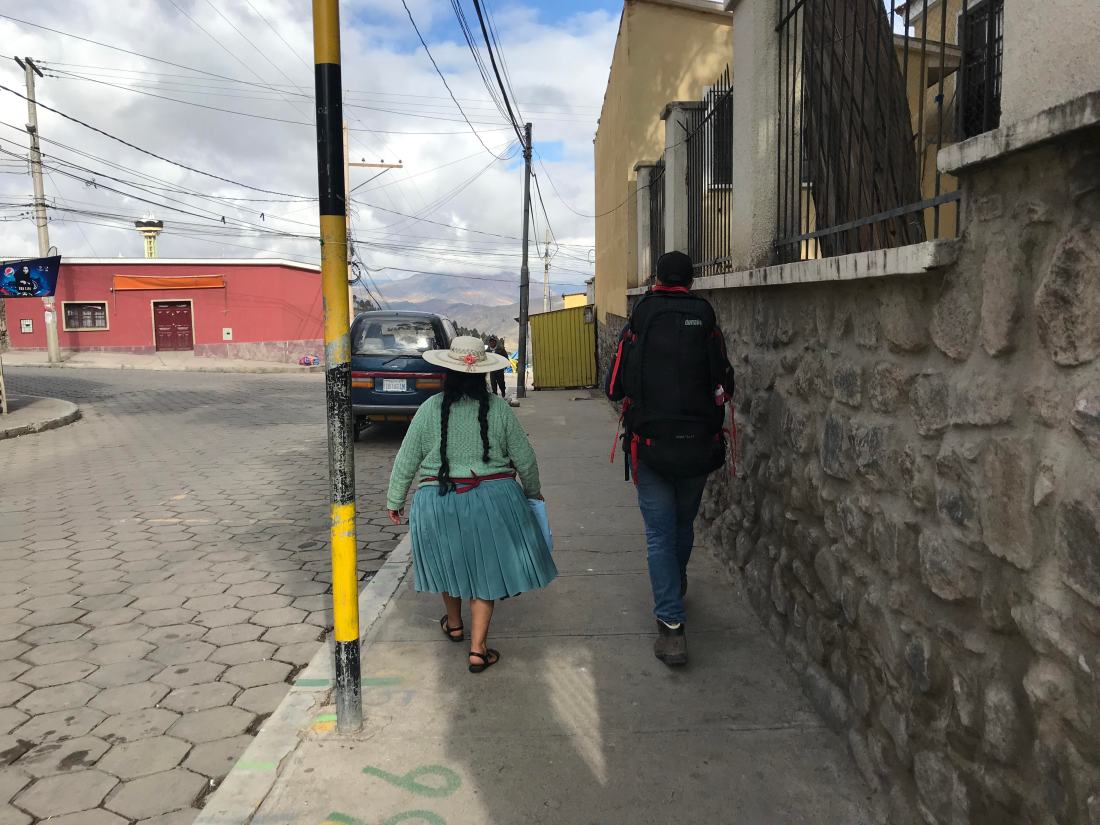
We walked from the bus station to our hostel as we thought it was only 2km away so should be easy. We were dead wrong, the altitude here is 4000m which made any slight uphill a big battle! Fun fact Potosí is the 3rd highest city (1st highest depending what source you read) in the world! So don’t walk with 17+kg backpacks! You will lose your breath.
We checked in to our hostel and then relaxed for an hour or so. Ellen did some preparation for her interview for the job in Canada – which she later absolutely nailed! Canada here we come.
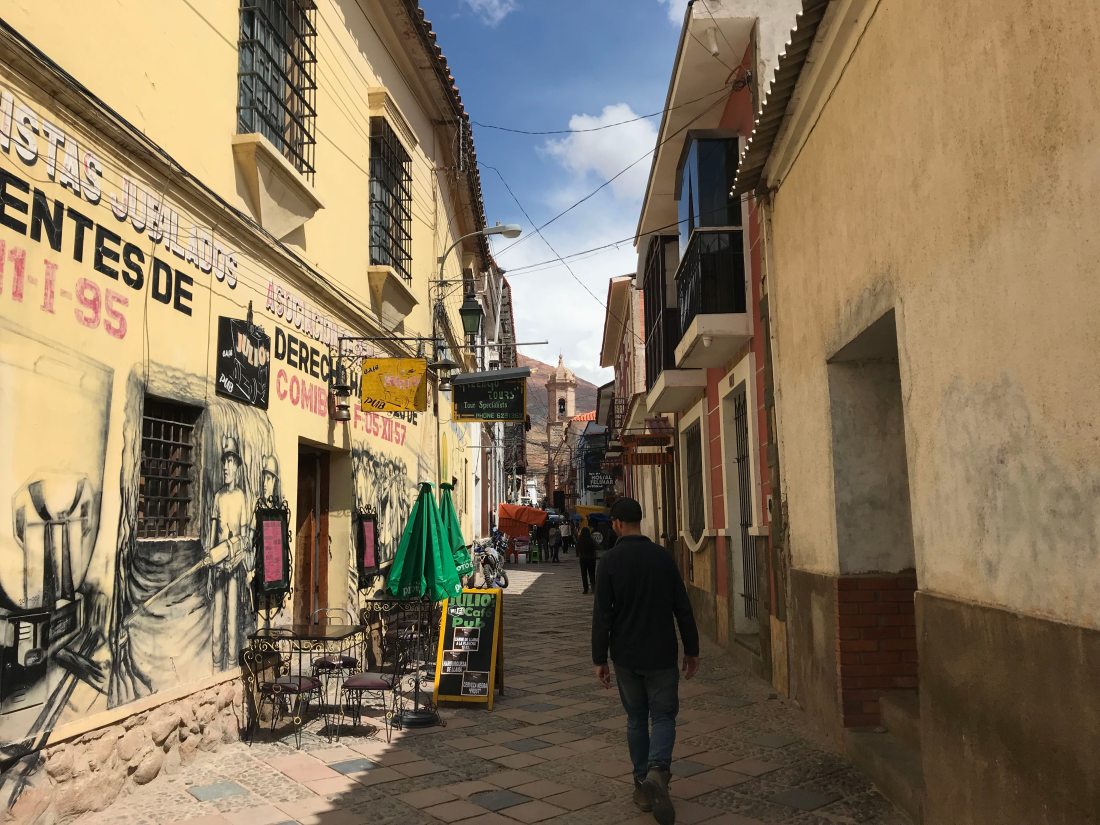
While Ellen did her interview I went and booked us in for a mine tour for the next day and had a wander around the town. It is quite a pretty town, we were not expecting this at all. Most reviews say it is quite ugly, but we are loving it so far.
We had a cruisy night watching Netflix. Still not quite used to the altitude.
Day 56
We woke early for the mine tour of the famous Cerro Rico mine here in Potosi. We met at the tour office just around the corner from the hostel and we were joined by one of our French friends, Flo, who did the Uyuni tour with us. He messaged us late last night about the tour, his partner doesn’t like small, dark spaced so she didn’t want to go to the mine. Fair enough – we were a bit edgy as well!
We headed off, 5 French and only us 2 Aussies were in the tour. There are an awful lot of French people here we have discovered, our hostel is full of them! We have nothing against French people, it is just an observation 🙂 Our guide can speak both French & English so he switched between the two languages for us. On the way to the mine we stopped in the area where a lot of miners live and also buy their equipment for the day. The street was bustling full of people. Here the miners can buy their cigarettes, coca leaves, alcohol and even DYNAMITE. I was shocked to find out that the miners have to provide their own tools including dynamite. I was even more shocked to know I could just go and buy a stick of dynamite from a little hole in the wall stall, including the detonator for $5 AUD.
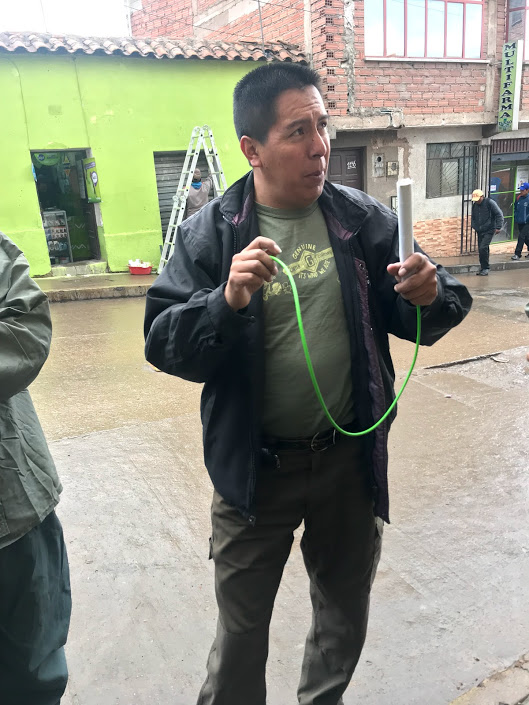
Here we got some insight into the harsh conditions of working in these mines. The life expectancy of the miners is 45 years, and we could tell as everyone walking along the street towards the mine looked to be in their 20s or 30s. The miners also do not eat during their shift as it is to deadly due to all the dust. Instead they chew coca leaves all day which helps to filter the dust from getting into the lungs. At the end of the day they drink 96% alcohol, sometimes they will mix it with water or soft drink, but often they will just drink it straight.
We bought some coca leaves and soft drinks to give to the miners as a gift and continued on to the entrance to the mine. We found out 20,000 miners work in this mine today, and 2 weeks ago 30,000 were working. There has recently been a reduction in price of silver so a lot of miners have been fired recently, it is a harsh reality in Potosi.
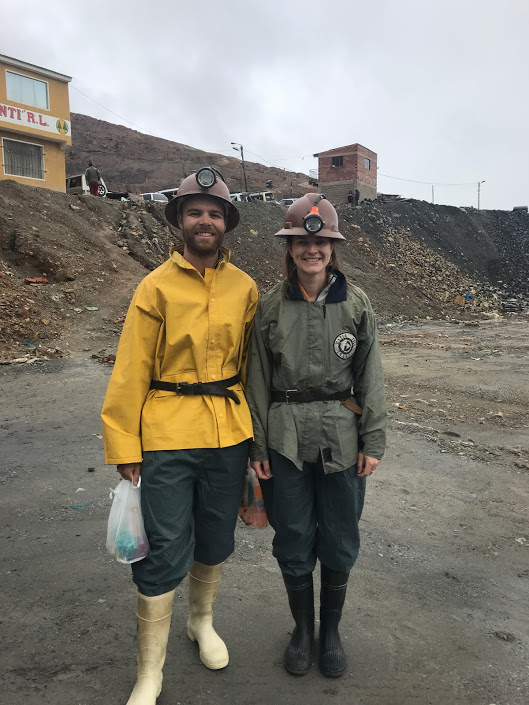
We arrived at the entrance to the mine and it is no bigger than 2.5m high & 3m wide, with rails extending into the depths of the mountain which is used to push carts full of minerals. It is like the photos you see from the old gold mining days.
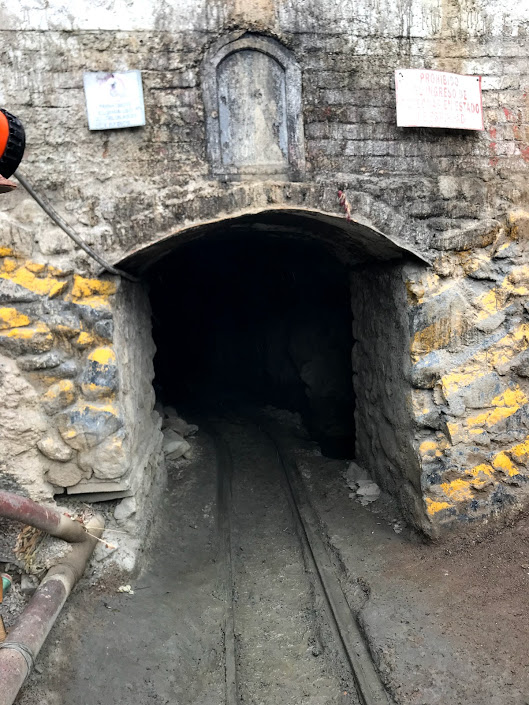
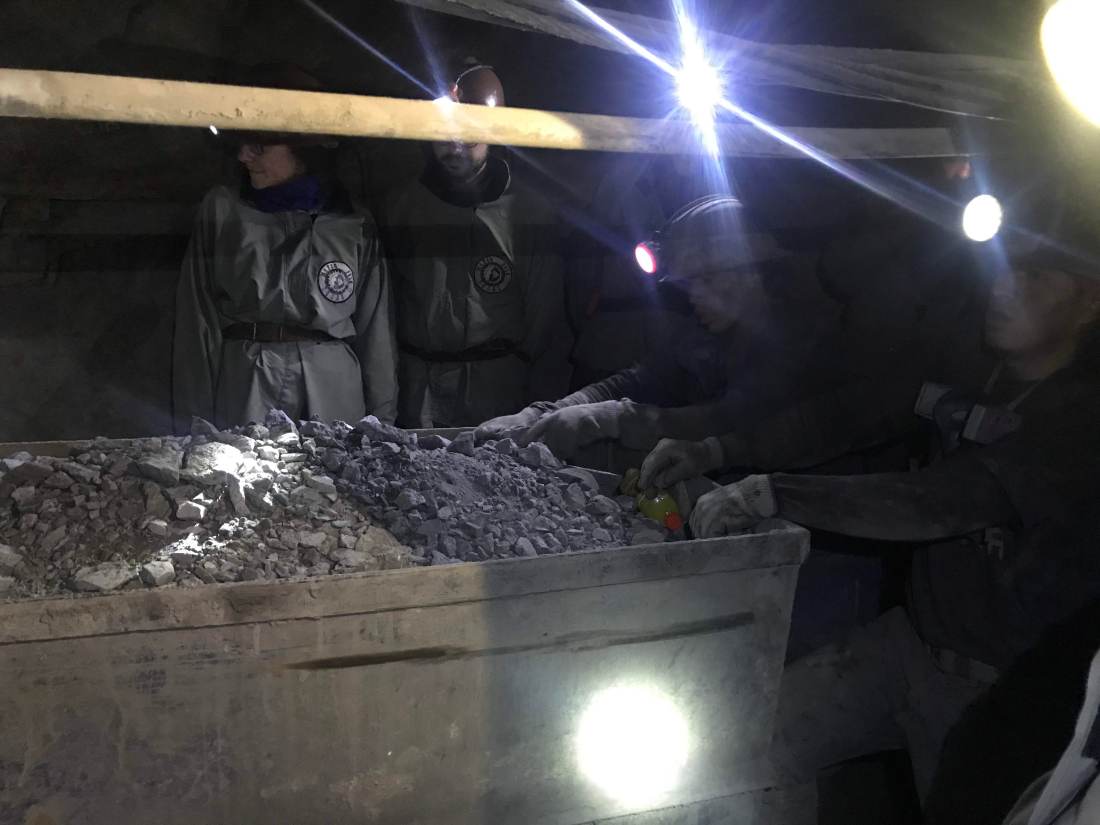
We flicked on our headlights and started the tour, it was very tight in places, and often we would have to crouch down to avoid hitting our heads. Sometimes we would need to move to the side to let some miners through, they were nice and said hello, we then gave them a soft drink or coca leaves which they accepted and continued on into the small dark maze of tunnels.
We talked a bit about the experience of miners, it is obvious not many engineers (if any) are present at this mine, and if there are engineers, their advice is probably ignored. The experience of the miners is passed from generation to generation. In the mines of 1st world countries each explosion is thoughtfully designed and put in particular places to avoid disturbance to the rest of the mine. Here the miners use experience and listen to the sounds of the explosions to tell if they are getting too close to another tunnel, or shaft. From this they will then turn the tunnel left or right or continue straight. Also, wooden props are only used in unstable areas as wood is very expensive in Bolivia. Our guide said there is a team which monitors this and goes around putting props up where required, I didn’t see many props, so I didn’t ask how big the team is so I didn’t scare myself! The top tunnels in the mountain are no longer in use as they are unstable, the mountain is slowly falling down little by little. I wish the guide told us that when we were outside of the mine!
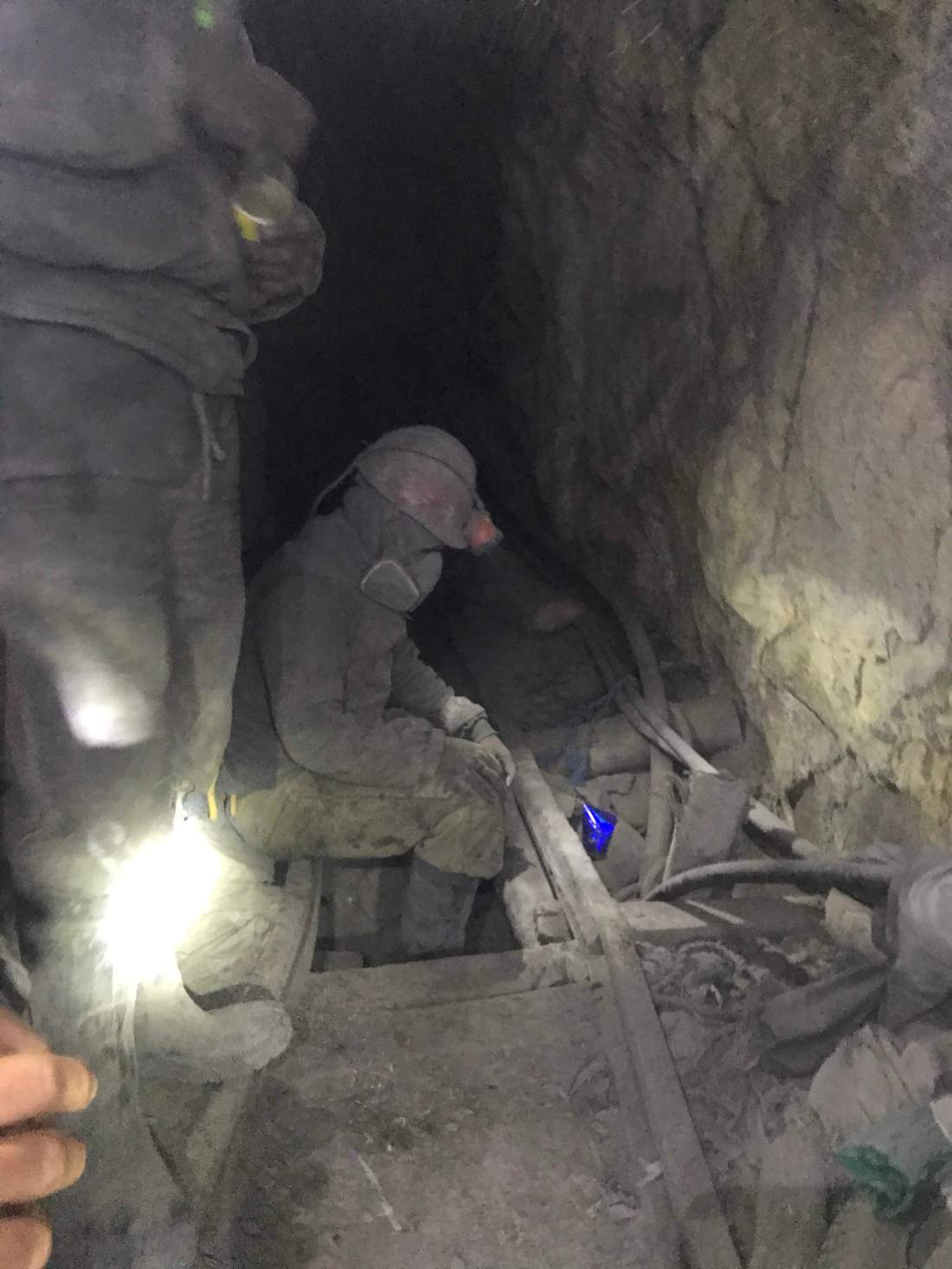
We stumbled across a miner monitoring the air for his fellow workers in the tunnel below. He said they were about to blow up a section of the mine, so we stayed to hear the explosion. We were told they light 12 or more sticks of dynamite and then have 3 minutes to run away and up to safer shafts where we were sitting. Sure enough, just before we heard a bang, a headlight and helmet popped up out of a little hole we had hardly noticed, closely followed by a second worker. The bangs were very loud, it was a bit frightening but we were told it was safe, our guide didn’t look worried anyway. We sat here for a while asking the workers some questions, even though the conditions are harsh and horrible, the three guys we were talking too seemed very proud of their jobs, as it is what their fathers & grandfathers did.
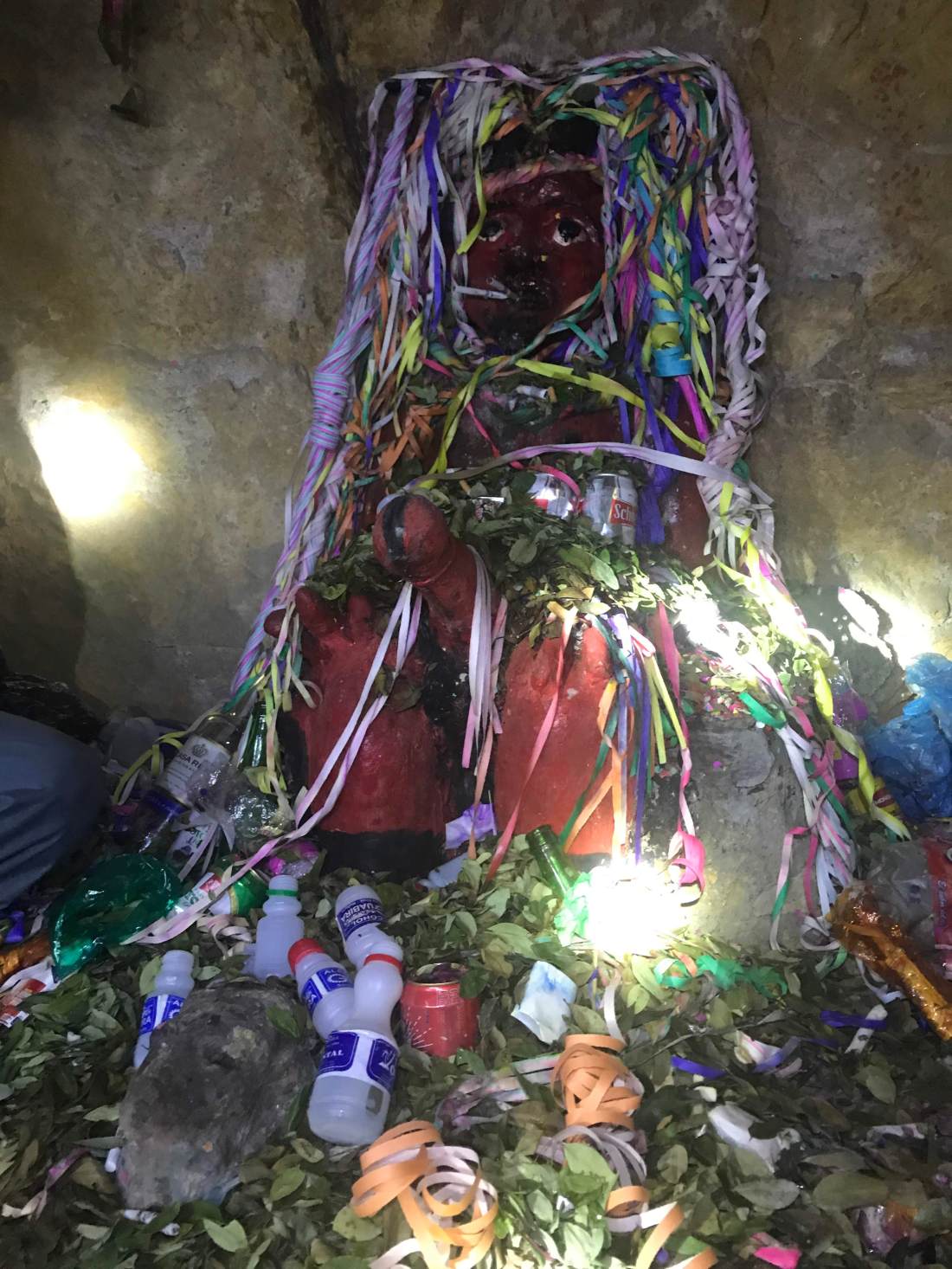
We continued on to a section of the mine which is no longer in use and is only for paying tribute to El Tio, the Devil, who is believed to be the owner of the mine. Here the miners pay tribute by giving cigarettes, coca leaves & alcohol to ask for riches from the mine. The miners also pay tribute to mother earth (the Pachamama) by sacrificing Llama’s and painting Llama blood on the entrance to the mine. We were told no women work in the mine because it is thought that the presence of a women would make mother earth jealous and bring them bad luck. We found this so interesting.
This concluded our tour as we made it back out the same way we came in. It was very eye opening to see not only the dangers the miners face day to day, but also to notice how very proud they are to be miners. Our guide was a miner for 7 years, but decided to study and do tourism as his father & grandfather both died at a young age. He said his mother was happy when he decided to stop working in the mine, but was very angry when he told her he was to be a guide of the mines! He was joking though. The mentality of young Bolivians is changing and now not everyone will work in the mines if their family did. There is some opportunities for Bolivians to study and work elsewhere, although this often comes down to if families can afford to pay for university.
We arrived back in the city centre and went and found some lunch. There was no menu, and we had no idea what the lady was saying our options were, so we just asked for whatever she recommended. Bit of a mistake there. What came out was some spaghetti with some meat – we are 99% sure the meat was pigs tongues. I tried it of course, it tasted like pork – but it was a bit off-putting having 7 tongues sitting in front of both of us. We tried out best to eat as much as we could so we didn’t offend the lady and then went home to relax for the afternoon. We shall not order food again in Bolivia without understanding what we are getting!
We then went to find a high viewpoint which overlooks the city. We went to a random Cathedral, and got a personal tour of the top viewpoint. We could see the whole city, with the massive Cerro Rico mountain behind.
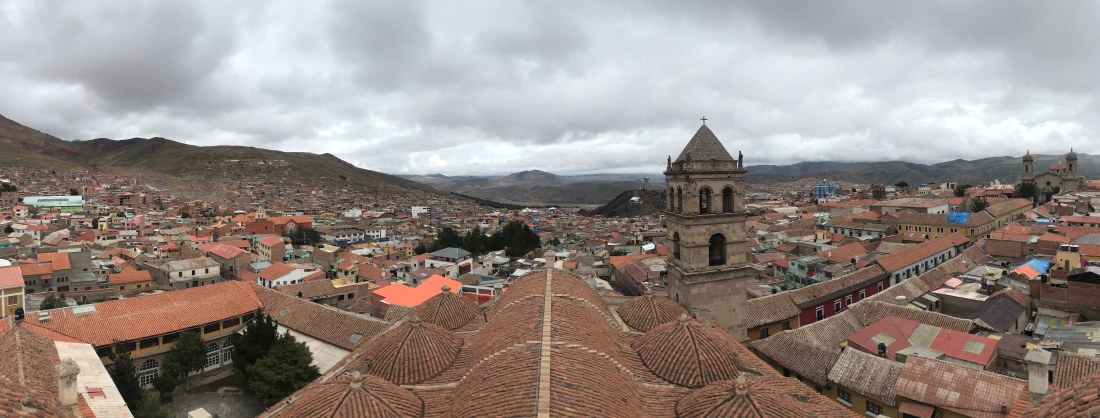
The roof tiles of this Cathedral were all shaped by using Indigenous & Africa slaves thighs, which is why they are not all the same shape.
We then went back to our hostel to relax a bit, feeling a bit queasy still from the pigs tongues! Later, we went and had dinner at a vegetarian restaurant which was nice. I think Ellen is now vegetarian.
Tomorrow we are moving on to Sucre!
More photos are here.

 Justin & Ellen's travels